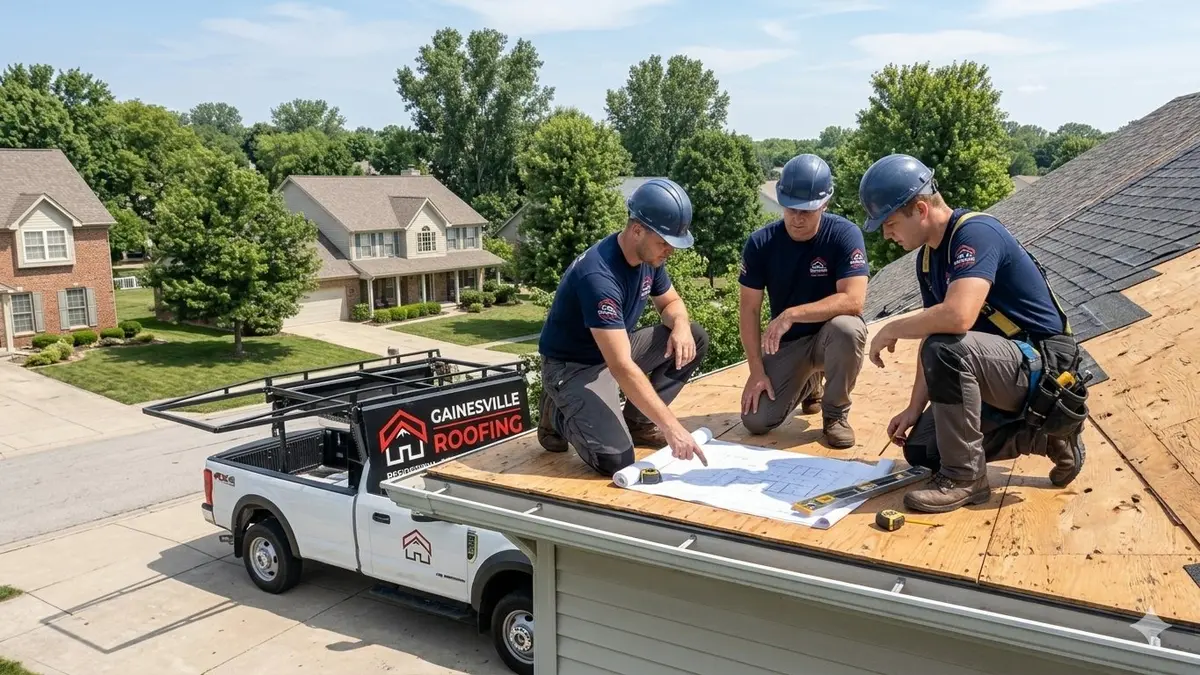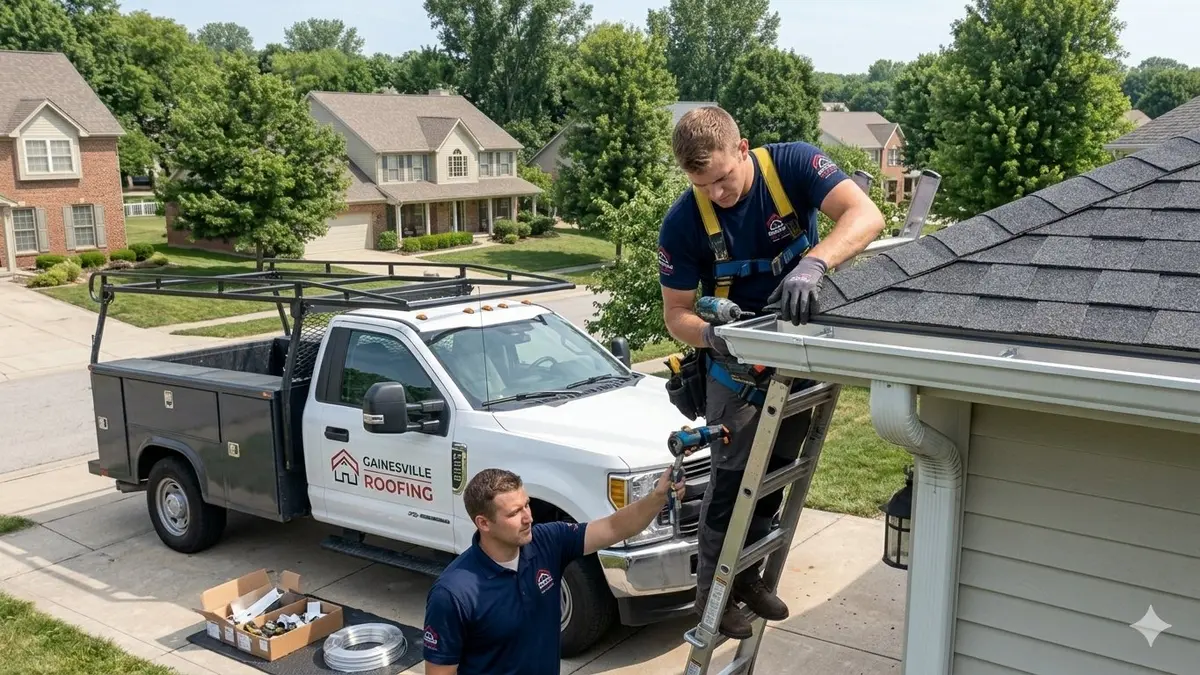
Storm damage is the most time-sensitive roofing work we do, and the most easily mishandled. When a storm rolls through Gainesville and a hundred roofs take damage in one night, every roofer's phone rings at once. Some of those calls go to out-of-state "storm chasers" who set up a P.O. box in Florida, work hard for six months, and disappear before the warranty needs honoring. Some go to companies that get the tarp up but never properly document the damage for insurance. Some go to roofers who quietly upsell the homeowner on damage that isn't actually there.
We've worked every significant storm event in Gainesville since 2008 — Irma in 2017, the hurricane-adjacent passes of recent seasons, and dozens of severe summer thunderstorm events that don't make national news but still tear off shingles and crack tile. Our storm-response model is simple: tarp first, document second, repair third, insurance handled throughout. We don't add damage that isn't there. We don't push a full replacement when a repair will do. And we work claims constantly, so we know exactly what insurance adjusters want to see in the documentation.
What to do in the first 24 hours after storm damage
If you've got an active leak from storm damage right now: call us first, then your insurance company. The order matters. We can have a tarp on your roof within four hours during storm response periods, which stops the interior damage that compounds the claim cost. Your insurance carrier wants you to mitigate further damage — that's what tarping does — and they'll reimburse the emergency-tarping cost as part of the claim if it's documented properly.
Once the tarp is up: take photos of everything inside and outside that's wet, stained, or damaged. Save receipts for any emergency supplies (tarps, buckets, dehumidifiers). Don't throw away damaged shingles or roof debris — your adjuster will want to see them. Don't sign anything that gives a roofer authority to negotiate with your insurance company on your behalf ("Assignment of Benefits" or AOB) until you've talked to your own attorney or insurance agent. AOB contracts are the source of much Florida roofing fraud and we never use them.
What we document during a storm-damage inspection
A proper storm-damage inspection in Gainesville should produce 50–100+ photos and a written report covering: visible shingle damage (creased, lifted, missing), granule loss in valleys and gutters (a sign of hail or wind impact), damage to flashings around chimneys and skylights, soft-metal damage on vents and exhaust caps (proves hail size if hail is suspected), damage to fascia, soffit, and gutters, and interior ceiling staining or attic moisture. We also photograph the surrounding properties for comparison — if every roof on your block has the same damage pattern, that's strong evidence of a storm event.
Hail damage in particular requires careful documentation because it's not always obvious to a homeowner. Hail can leave dents in soft metal (vent caps, gutters) and bruising on shingles that doesn't fully express until months later when the bruised spots fail prematurely. If a storm event has occurred and your neighbors are filing hail claims, get an inspection even if your roof looks fine from the ground. The insurance claim window in Florida is typically 1–2 years from the date of loss, and waiting too long can result in a denial.
Working with your insurance adjuster
This is where most Gainesville homeowners get tripped up. The insurance adjuster works for the insurance company, not for you. Their job is to settle the claim fairly — but "fairly" in their training means matching the scope to the actual damage, no more. A good adjuster won't shortchange you. A rushed or under-trained adjuster might miss damage that's there. And the insurance carrier's preferred contractor list often contains low-bid roofers who'll work to the adjuster's scope without pushing back on missed items.
Our approach: we meet your adjuster on the roof. We walk them through what we've documented. If they want to scope it lower than what we found, we provide additional photos and the relevant code references (Florida Building Code has specific replacement requirements after certain damage thresholds). We are not a public adjuster — we don't negotiate the claim — but we make sure nothing that's there gets missed. About 80% of the time, our on-roof meeting with the adjuster results in a scope that fully covers the damage. The other 20%, the homeowner appeals or brings in a public adjuster and we support that process with our documentation.